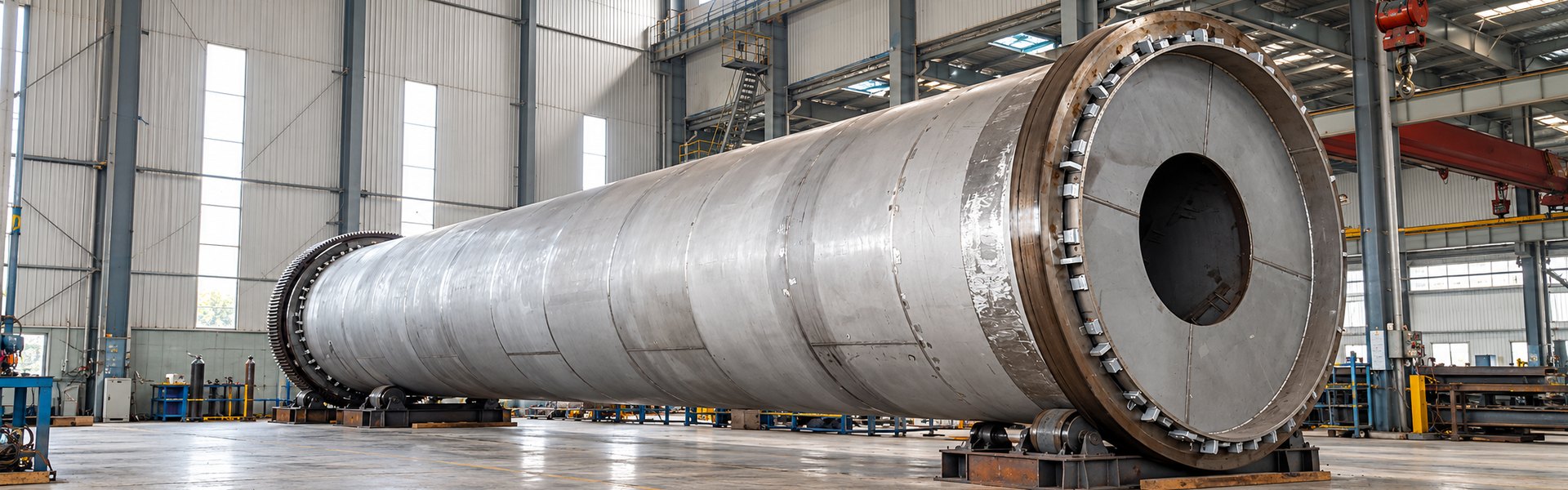
Rotary Kiln Design
Every kiln is a bespoke sizing exercise. The geometry follows the process, not the other way round.
Length, diameter and slope
The length-to-diameter ratio, the incline and the fill level together set residence time — how long material stays in the hot zone, and therefore how completely it is processed. These are chosen from the material's heat-transfer properties and the target conversion, not from a catalogue.
Temperature profile
The kiln is designed around the process temperature band — from a few hundred degrees for drying and pyrolysis to over 1,400 °C for clinker. The shell, refractory and seals are all specified to that band.
Heating mode
Direct or indirect depends on whether the process gas may contact the material. Pyrolysis requires indirect firing and an oxygen-free atmosphere; calcination usually tolerates direct firing.
Atmosphere and seals
The internal atmosphere — air, inert gas, or a controlled reducing environment — dictates the seal specification and the gas path through the kiln.
Drive and control
The drive must hold a steady, adjustable rotation across the full load range, and modern kilns are instrumented for continuous temperature, pressure and speed control.
The design sequence: start from the material — its chemistry, particle size and target conversion — then derive length, diameter, slope, heating mode and atmosphere. That is the difference between a kiln that works and one that limps.