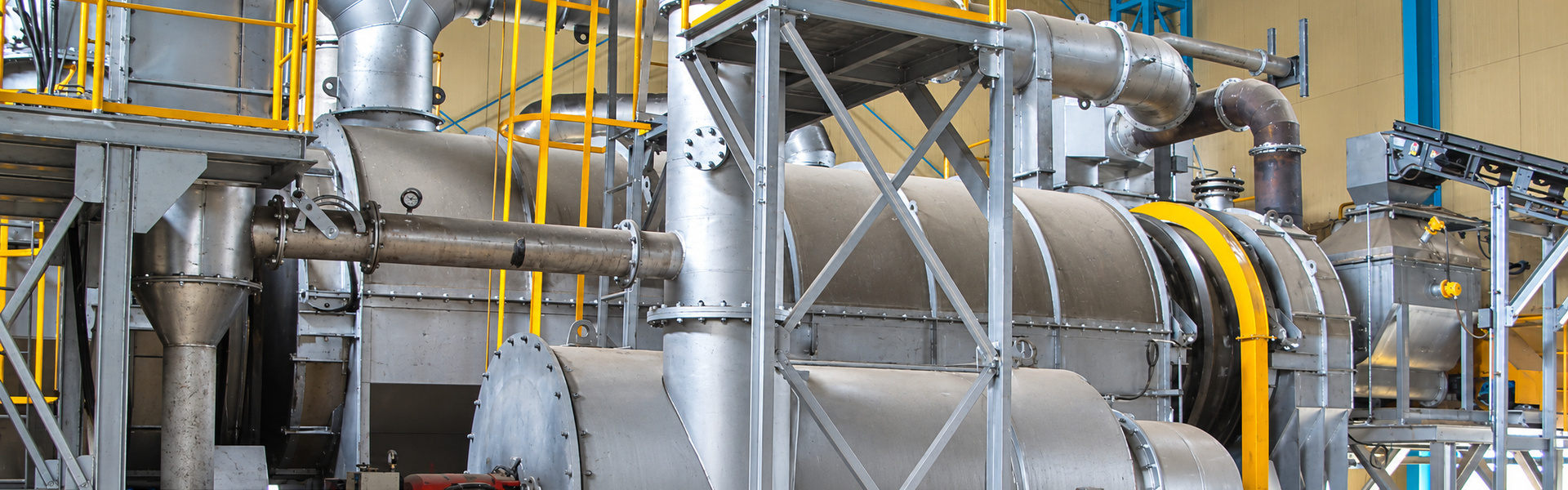
Biomass Pyrolysis in a Rotary Kiln
Biomass — wood chips, agricultural residue, and other renewable carbon — is heated in an indirectly fired rotary kiln without oxygen until it thermally decomposes, yielding three streams at once: biochar solids, combustible syngas, and a condensable bio-oil.
How it works
Biomass feeds into the kiln and is raised to pyrolysis temperature, typically several hundred degrees Celsius. Volatile gases and vapours are drawn off and partly condensed to bio-oil, while the non-condensable syngas can be burned to help heat the kiln. The carbon-rich solid that remains is biochar — stable carbon that can improve soils or serve as a fuel.
Why the kiln suits biomass
Biomass is variable, moist and bulky. The kiln's rotation delivers even heating across the whole feed so the biochar exits uniform rather than patchy, and its controlled atmosphere lets an operator tune the split between solid, gas and liquid product.