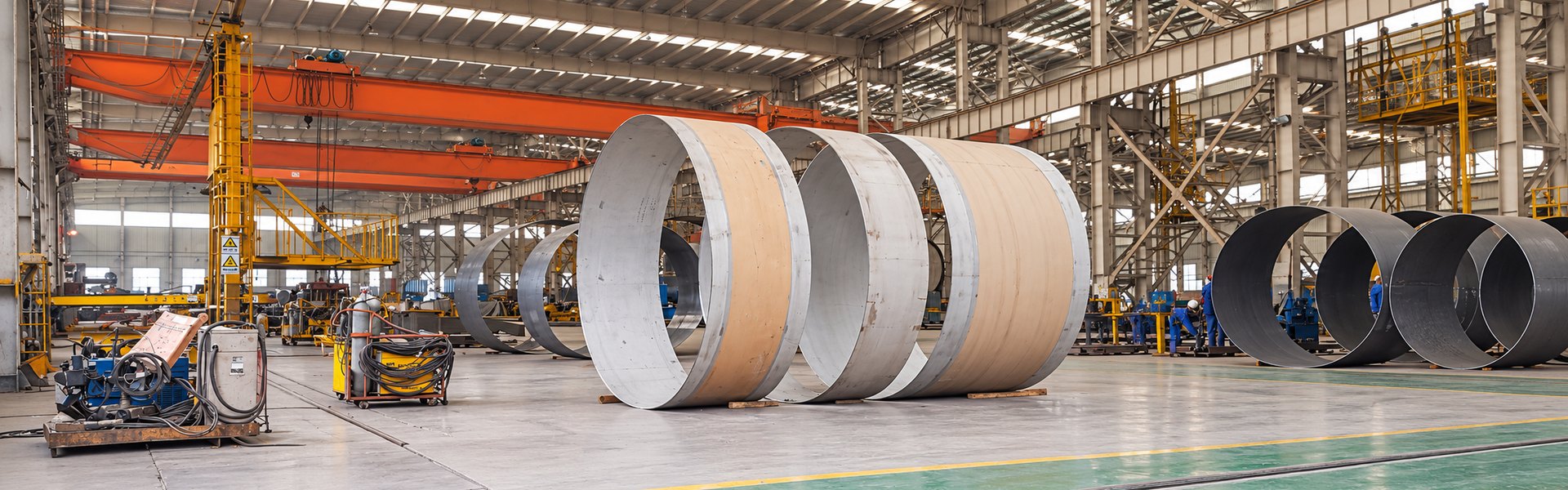
Rotary Kiln Components
A kiln is a rotating vessel with a carefully specified set of parts. Each one matters to how it runs.
The shell
A welded steel cylinder, usually running on two or more riding rings, that carries the entire load and must stay round, straight and within tolerance while hot.
Refractory lining
Inside the shell, a refractory protects the steel from the process temperature and can be engineered to suit the material and chemistry — from low-temperature firebrick to high-alumina and protective linings.
The drive
A motor and gearbox drive the shell through a girth gear or chain, controlling rotation speed and torque. Steady, controllable rotation is what keeps residence time predictable.
Seals
Rotating seals at the feed and discharge ends hold the atmosphere — keeping combustion air in, or keeping oxygen out for pyrolysis. Seal design is one of the most demanding aspects of kiln engineering.
Burners and heat source
For direct firing, the burner produces the flame; for indirect, burners or electric elements heat the shell externally. The heat source is sized to the process temperature and the throughput.
Feed and discharge
Inlet feeders meter material into the upper end without disrupting the atmosphere; discharge hoods extract product and gas cleanly at the lower end.